 English
 Español
 Русский
When people see a water well drilling rig working on a job site, the process can look complicated. The machine is large, there are many components working together, and drilling happens deep underground where we cannot directly see what is happening.
But the basic idea is actually quite simple.
A water well drilling rig uses drilling tools to break through different layers of soil and rock, while continuously removing the cuttings from the borehole until the required depth is reached.
The challenge is not only drilling deeper—it is making sure the equipment, drilling method, and working conditions all match correctly.
The drilling process usually starts with the rig positioning itself at the planned drilling location.
After setup, the drill pipe and drill bit begin moving downward. Depending on the ground conditions, different drilling methods can be used. In softer formations, rotary drilling is often used to cut through the soil, while harder rock formations may require DTH drilling, where impact energy is delivered directly near the drill bit.
As the drill bit breaks the underground formation, the cuttings need to be removed continuously. This is usually done through air circulation or drilling fluid, depending on the drilling system being used.
The process continues until the required depth and formation are reached.
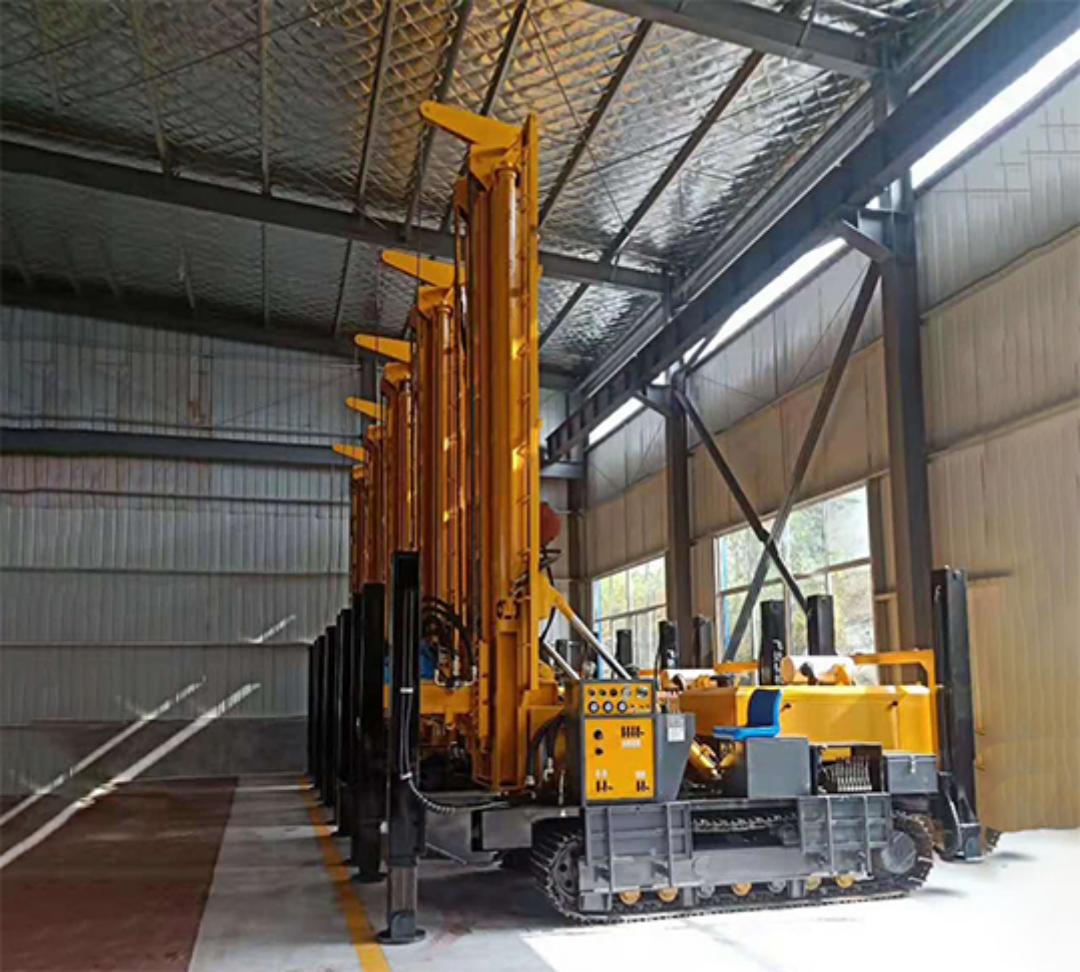
Although drilling rigs come in different designs, most water well drilling rigs rely on several important systems working together.
The power system provides energy for the whole machine, including movement, rotation, and drilling operations.
The drilling system is responsible for breaking the underground formation. This includes components such as drill pipes, drill bits, and sometimes a DTH hammer for hard rock drilling.
The air compressor or fluid system plays another important role. During drilling, it helps remove cuttings from the hole and keeps the drilling process running smoothly.
Each part has a specific function, but the final performance depends on how well these systems work together.
Not every underground condition is the same.
Some areas may mainly contain soil, clay, or soft formations, while others may have hard rock layers that require stronger impact energy.
This is why choosing the right drilling method is important.
For example, rotary drilling systems are often suitable for softer ground conditions, while DTH drilling rigs are commonly used when higher rock-breaking efficiency is needed.
A drilling rig is not simply about having more power. The right configuration for the actual ground conditions usually creates better results.
Water well drilling rigs are available in different configurations depending on project requirements.
A truck mounted water well drilling rig focuses on mobility and is suitable for projects where the equipment needs to move frequently between different locations.
A crawler mounted water well drilling rig provides better stability and terrain adaptability, making it suitable for areas with difficult access or uneven ground.
A portable water well drilling rig focuses on flexible deployment and is often chosen by contractors who need equipment that can be transported easily between different projects.
The drilling principle is similar, but the equipment configuration can greatly affect how efficiently the rig works in real conditions.
A drilling rig is not only a machine for making holes—it is a tool that directly affects project efficiency.
The wrong equipment choice can lead to slower drilling speed, unnecessary downtime, or difficulty working in certain locations.
Before choosing a rig, contractors usually need to consider factors such as drilling depth, geological conditions, mobility requirements, and project frequency.
A suitable machine helps operators complete projects more smoothly and provides better value over the long term.
With different projects requiring different drilling solutions, Kaishan focuses on providing equipment configurations that match real working conditions.
Kaishan water well drilling rigs are designed with durability, stable performance, and practical operation in mind. Whether the project requires a truck mounted rig, crawler mounted rig, portable drilling rig, or DTH drilling solution, we can help customers choose suitable equipment based on their actual requirements.
From technical communication before purchase to equipment support after delivery, Kaishan provides complete service to help customers improve drilling efficiency and complete their projects successfully.
