 English
 Español
 Русский
Choosing a water well drilling rig is not just about selecting a machine with the biggest drilling depth or the highest power.
In real projects, the wrong equipment choice can create problems later. Once the rig arrives at the site, your flexibility becomes much lower, and changing the plan usually means more time and effort.
That is why understanding your project conditions before choosing a water well drilling rig is one of the most important steps before starting drilling.
A suitable rig does not only make drilling easier—it helps the whole project run more smoothly from the beginning.
The first thing to consider is not the machine itself, but the environment where it will work.
Different locations can have completely different ground conditions. Some areas may contain soft soil, sand, or clay, while others may involve gravel layers or hard rock formations.
These conditions directly affect drilling performance.
For example, a drilling method that works well in soft formations may not perform efficiently in hard rock. On the other hand, choosing a machine that is much larger than necessary may increase operating difficulty without bringing real benefits.
The right choice starts with understanding what is underground.
Drilling depth is another important factor when selecting a water well drilling rig.
A shallow water well project and a deep industrial well require different equipment capabilities. The rig needs enough power and stability to complete the job efficiently, but it should also match the actual project requirements.
Besides depth, factors such as borehole diameter and final well usage can also affect equipment selection.
A good drilling solution is always based on the complete project requirements, not just one specification.
Different formations require different drilling methods.
For softer formations, rotary drilling systems are often a practical choice because they can provide efficient cutting performance.
When drilling in harder rock, DTH (Down-The-Hole) drilling becomes a more suitable option because the impact force is generated directly near the drill bit, reducing energy loss during transmission.
For projects with changing geological conditions, some rigs can combine different drilling methods to provide more flexibility.
The key point is simple: the drilling system should match the ground conditions.
Mobility is another factor that is often overlooked.
If your project requires moving between multiple drilling locations, a truck mounted water well drilling rig can provide faster transportation and easier relocation.
Because the drilling system is installed on a truck chassis, it can move directly between sites without additional transport equipment.
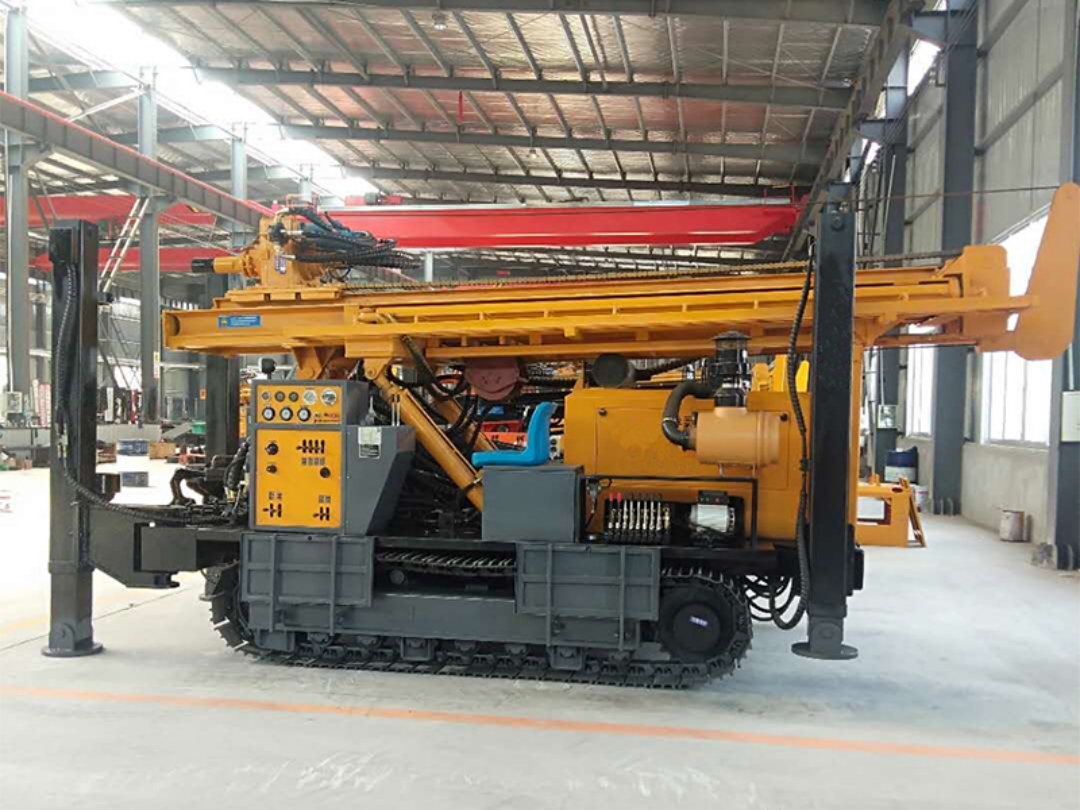
However, if the working environment includes uneven terrain, muddy areas, slopes, or locations with limited access, a crawler mounted water well drilling rig may be a better choice.
Crawler systems provide better stability and terrain adaptability, allowing the rig to operate in more challenging conditions.
In practice, choosing a drilling rig is about matching the machine with the project.
Before making a decision, it is important to consider:
Ground conditions
Required drilling depth
Borehole size
Drilling method
Site accessibility
Frequency of relocation
No single drilling rig is perfect for every situation.
The best equipment is the one that fits your actual working environment and helps you complete the project efficiently.
Choosing the right equipment is only the first step. Reliable performance and proper technical support are also important throughout the drilling process.
Kaishan Group provides a wide range of water well drilling rigs designed for different project conditions, including truck mounted rigs, crawler mounted rigs, and DTH drilling solutions.
With years of experience in drilling equipment manufacturing, Kaishan focuses on durability, stable performance, and practical solutions for real field applications.
More importantly, we understand that every drilling project has different requirements. Instead of simply recommending a standard model, we can help analyze your drilling depth, geological conditions, mobility needs, and working environment to recommend a suitable configuration.
Choosing the right water well drilling rig at the beginning can make a significant difference in drilling efficiency, operating reliability, and overall project success.
