 English
 Español
 Русский
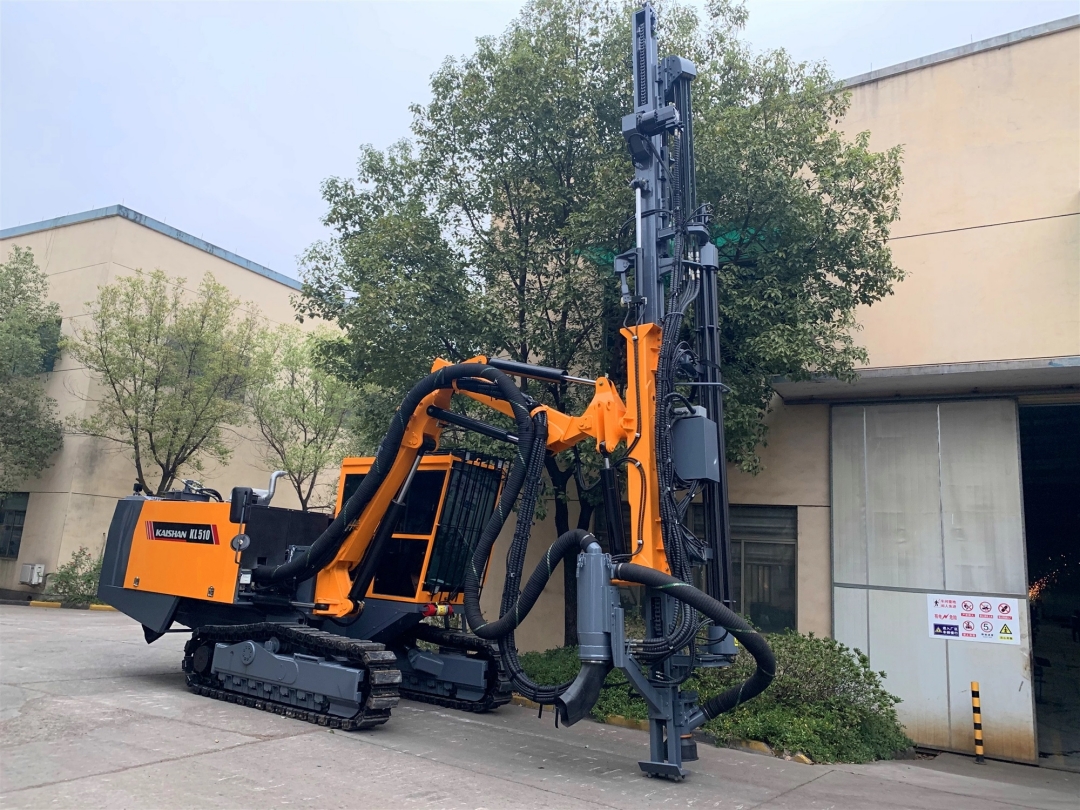
A hydraulic drilling rig uses hydraulic power to control key drilling operations such as rotation, feeding, lifting, and positioning. This gives the machine smooth control and consistent power during drilling, making hydraulic systems suitable for projects that require stable performance and frequent adjustment of drilling parameters.
For drilling contractors, the value of a hydraulic drilling rig is not simply having a hydraulic system. What matters is how that system works with the drilling mechanism, power source, and overall machine configuration to provide reliable performance under actual project conditions.
The hydraulic system transfers power through hydraulic pumps, valves, motors, and cylinders to control different movements of the drilling rig.
During drilling, hydraulic power can be used to control the rotation of the drill string, the feeding force applied to the drill bit, and the lifting or lowering of the drilling assembly. Because these functions can be adjusted smoothly, operators can respond to changes in formation conditions without relying on simple fixed mechanical movements.
The exact hydraulic configuration varies between machines, but the basic purpose is the same: to provide controlled power where it is needed during drilling.
One major advantage is precise control.
Drilling conditions can change as the borehole becomes deeper or the formation changes. Hydraulic systems allow operators to adjust drilling movements and force more smoothly, helping maintain stable operation instead of applying excessive or insufficient force.
Another advantage is efficient power transmission. Hydraulic components can deliver substantial force through a relatively compact system, which is useful when a drilling rig needs strong feeding or lifting capability without making the entire machine unnecessarily complicated.
Hydraulic systems can also make several machine movements easier to coordinate. This is particularly useful on drilling equipment that needs to perform repeated rotation, feeding, lifting, and positioning operations throughout a project.
Drilling is rarely a completely uniform process.
A drill bit may encounter loose soil, compact formations, gravel, or harder rock at different stages of the same borehole. The machine therefore needs to respond to changing resistance rather than simply operating at one fixed setting.
Hydraulic control gives the operator more flexibility to adjust the drilling process according to these conditions. This can help reduce unnecessary stress on the drilling system and maintain more consistent performance.
For contractors, this matters because stable drilling is not only about reaching the required depth. It also affects productivity, tool wear, fuel consumption, and overall operating costs.
Hydraulic drilling rigs can be configured for different types of drilling projects, depending on the drilling system and tools installed on the machine.
They can be used for water well drilling, geological investigation, mining-related drilling, and other projects where controlled drilling operations are required.
The most suitable configuration depends on the formation, required depth, borehole diameter, mobility requirements, and drilling method. A hydraulic system provides the power and control, but the rest of the machine still needs to be matched to the project.
Start with the conditions the machine will actually face.
Consider the typical geological conditions, required drilling depth, borehole diameter, and expected drilling frequency. If the equipment needs to move between different locations, transportation and machine configuration also become important.
It is also worth looking beyond the hydraulic system itself. The engine, rotary system, feed mechanism, drilling tools, and supporting equipment all influence the final drilling performance.
A well-matched hydraulic drilling rig should provide enough capacity for the projects you expect to handle without paying for unnecessary specifications.
Kaishan provides hydraulic drilling rigs designed around different drilling requirements and operating conditions.
Our team can help customers evaluate geological conditions, drilling depth, borehole requirements, mobility, and expected workload before recommending a suitable configuration. This allows the hydraulic system and other major components to work together as a complete drilling solution.
With reliable equipment, practical configurations, and technical support, Kaishan helps customers achieve stable drilling performance and build efficient long-term drilling operations.
