 English
 Español
 Русский
In mining projects, drilling is often the first step in understanding what exists beneath the surface.
Before a mining operation can be developed, companies need reliable information about underground formations, mineral distribution, and geological conditions. This information usually comes from drilling activities.
A mining drilling rig is designed for these exploration and drilling tasks. Unlike equipment mainly used for water wells or construction projects, mining drilling rigs focus more on reaching underground formations and collecting useful geological information.
The purpose is not only to create a hole, but also to help companies better understand the resources beneath the ground.
A mining drilling rig is a type of drilling equipment used in mineral exploration, geological investigation, and mining-related projects.
During operation, the drilling system uses different tools and methods to break rock formations and collect information from underground.
Depending on the project requirements, mining drilling rigs can use different drilling methods. Some systems focus on fast rock penetration, while others are designed to recover complete samples for detailed analysis.
The right drilling method depends on what information the project needs and what kind of formation the equipment will encounter.
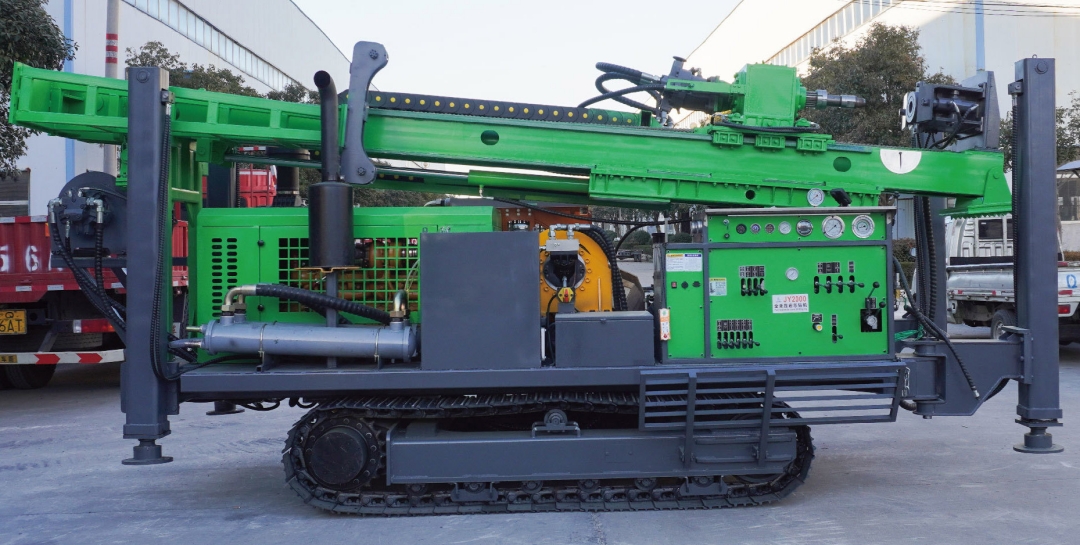
Although different mining drilling rigs use different systems, the basic process is similar.
The drilling tool moves into the ground and breaks the surrounding rock formation. At the same time, the drilling system removes cuttings or recovers rock samples so engineers can analyze underground conditions.
For example, some drilling systems use impact energy to break hard rock efficiently, while others focus on recovering continuous core samples for geological study.
The drilling method, equipment configuration, and working conditions all work together to determine the final drilling performance.
Mining projects have different goals, so the drilling equipment used can also be different.
For projects that require fast drilling in hard rock formations, DTH drilling rigs are commonly used because the impact force is generated close to the drill bit, improving rock-breaking efficiency.
For mineral exploration projects where accurate samples are important, reverse circulation (RC) drilling rigs are widely used because they can quickly collect rock samples from underground.
Core drilling rigs are another common choice when companies need complete rock cores for detailed geological analysis.
Each type of equipment has its own advantages, and the best solution depends on the purpose of the project.
In mining projects, drilling efficiency and information quality can directly affect project decisions.
A machine that is not suitable for the working conditions may result in slower progress, higher operating costs, or unreliable geological information.
This is why equipment selection should be based on actual project requirements, including the type of drilling work, geological conditions, and expected results.
The best drilling rig is not always the largest or most powerful one. It is the equipment that matches the project and can maintain stable performance in real working conditions.
For mining and exploration projects, reliable equipment is essential for long-term operation.
Kaishan provides drilling solutions designed for different mining applications, including DTH drilling, RC drilling, and core drilling systems.
With durable equipment, professional technical support, and experience in drilling solutions, Kaishan helps customers select suitable equipment based on their actual project conditions.
Whether the goal is hard rock drilling, mineral exploration, or geological investigation, Kaishan provides practical solutions to help customers improve drilling efficiency and complete projects successfully.
