 English
 Español
 Русский
The right air compressor for water well drilling depends mainly on the drilling method, required air pressure, air flow, borehole diameter, depth, and ground conditions. For DTH drilling, the compressor needs to provide enough pressure to operate the hammer and enough air flow to remove cuttings from the borehole. Choosing one based only on horsepower can easily lead to a poor match.
For DTH water well drilling, compressed air does much more than simply power the hammer.
Air travels through the drill pipe to the DTH hammer at the bottom of the borehole. The compressed air drives the hammer to deliver repeated impact energy to the bit, while the returning air carries broken rock and other cuttings out of the hole.
This means the compressor directly affects both rock breaking and cuttings removal. If the air supply is not sufficient, drilling performance can drop even when the drilling rig itself has enough power.
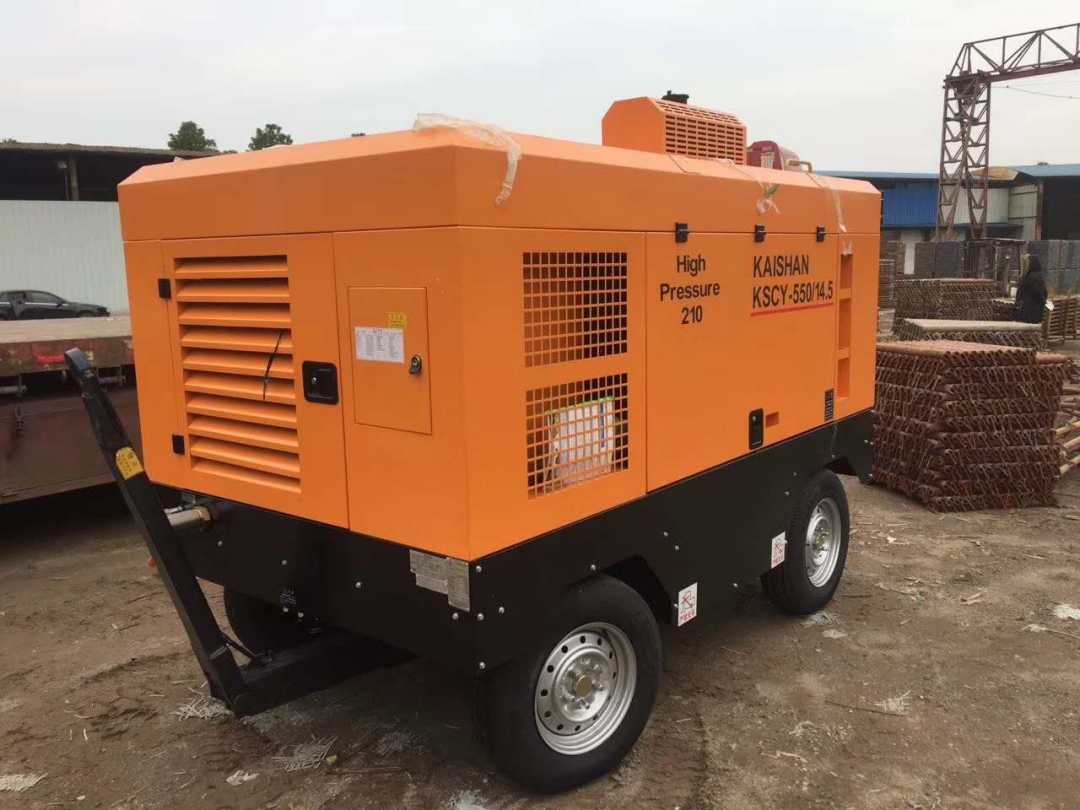
There is no single compressor size that works for every water well drilling project.
For DTH drilling, the required compressor capacity is normally determined by the hammer’s working pressure and air consumption. Borehole diameter and depth also need to be considered.
As a general reference, water well DTH systems may use compressors in the range of 17–35 bar (250–500 psi), with air delivery commonly around 17–35 m³/min. Actual requirements can be significantly different depending on the hammer and drilling conditions.
The safest approach is to start with the DTH hammer specification and work backward to the compressor.
These two specifications are easy to confuse, but they do different jobs.
Air pressure is important for operating the DTH hammer and maintaining sufficient pressure at the bottom of the borehole.
Air flow is the amount of air the compressor can deliver over time. It helps keep the hammer operating properly and provides the air volume needed to carry cuttings out of the hole.
A compressor with high pressure but insufficient air flow may not deliver the expected drilling performance. The same problem can occur with a compressor that has plenty of air flow but cannot maintain the required pressure.
So when comparing compressors, look at both numbers, not just the engine horsepower.
As the borehole becomes deeper, compressed air has to travel farther through the drill string before reaching the hammer.
Pressure losses can become more noticeable, and the compressor needs enough capacity to maintain the required working conditions at the bottom of the hole.
This is one reason a compressor that works well for a shallow water well may not be suitable for a much deeper borehole.
Depth should therefore be considered together with the hammer, drill pipe, borehole diameter, and formation.
The DTH hammer is one of the most important specifications when selecting an air compressor.
Different hammer sizes and models have different air consumption and pressure requirements. A larger hammer generally requires a greater air supply, especially when used for larger-diameter drilling.
For this reason, it is better to choose the compressor after the drilling hammer and drilling requirements have been determined, rather than selecting a compressor first and trying to make the rest of the system fit.
An undersized compressor can create several problems.
The DTH hammer may not receive enough air to operate efficiently. Rock cuttings may not be removed effectively, which can slow drilling and increase the risk of problems inside the borehole.
The drilling rig may still be running, but the overall system will not be working at its full potential.
In practice, a compressor that is slightly undersized can end up costing more through longer drilling time and lower productivity.
Not necessarily.
An oversized compressor can provide more capacity than the drilling system actually needs, increasing the initial investment and potentially increasing fuel consumption and operating costs.
The goal is to find a compressor with enough pressure and air flow for the actual drilling conditions, with a reasonable operating margin.
A well-matched compressor and drilling rig will generally be more practical than simply choosing the largest available model.
If you want a suitable compressor recommendation, provide the supplier with as much of the drilling information as possible.
The most useful details include:
With these details, the supplier can determine the required pressure and air flow more accurately and recommend a suitable compressor configuration.
An air compressor should be treated as part of the complete water well drilling system, not as a separate piece of equipment.
Kaishan can help customers match the air compressor, DTH hammer, and water well drilling rig according to drilling depth, borehole size, geological conditions, and expected project requirements.
The right combination can help maintain stable hammer performance, effective cuttings removal, and efficient drilling throughout the project.
