 English
 Español
 Русский
The right air compressor for a water well drilling rig depends mainly on the required air pressure and air flow, along with the drilling depth, borehole diameter, rock formation, and DTH hammer being used. A small water well project may work with a relatively compact compressor, while deep or hard-rock drilling can require a much larger high-pressure unit.
Choosing the compressor is therefore not simply a matter of picking the highest horsepower available. The compressor needs to match the drilling system as a whole.
For DTH water well drilling, air compressors commonly fall into the range of 17–35 bar (250–500 psi), with air delivery often ranging from around 17 to 35 m³/min, depending on the drilling setup.
These numbers are only general references. The actual requirement depends heavily on the DTH hammer, borehole diameter, drilling depth, and geological conditions.
A larger hammer or larger borehole usually requires more air, while deeper drilling can also increase the pressure and air-flow requirements.
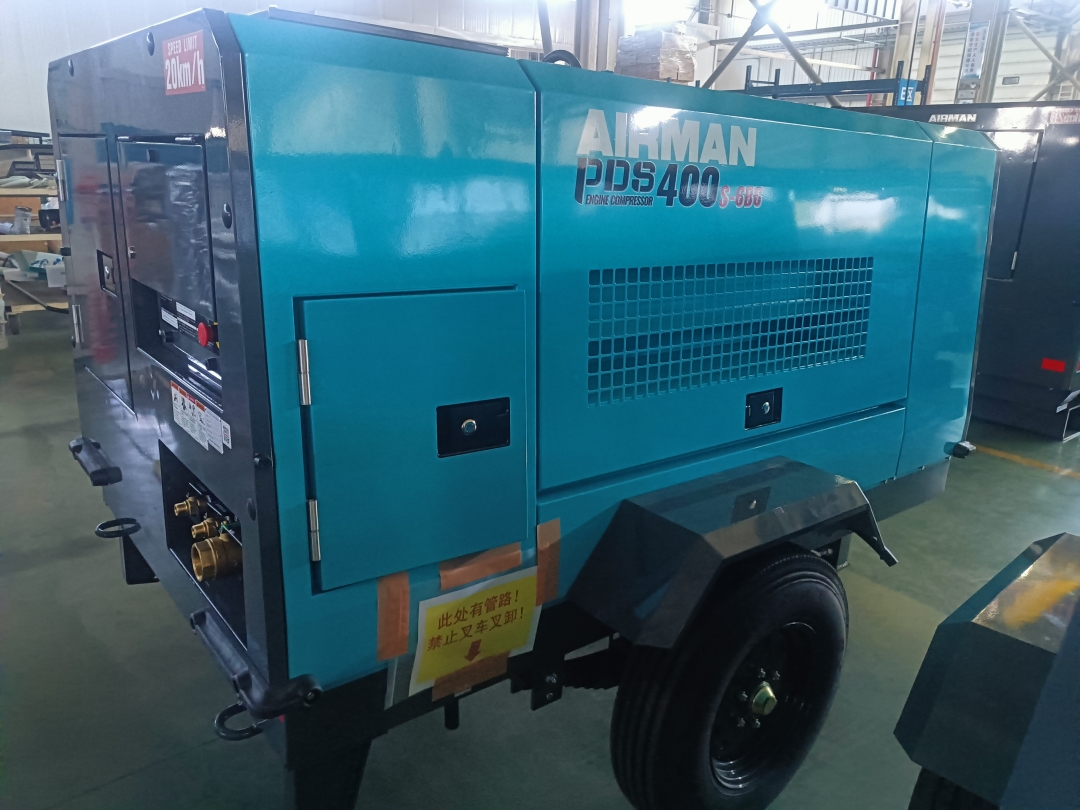
When choosing an air compressor, pressure and air flow need to be considered together.
Pressure determines whether the compressed air can operate the DTH hammer effectively at the required depth. Air flow determines whether there is enough air to keep the hammer working and remove rock cuttings from the borehole.
A compressor with high pressure but insufficient air flow may still fail to provide good drilling performance. The same is true for a compressor that provides plenty of air but cannot maintain the required working pressure.
That is why looking only at compressor horsepower can give you the wrong answer.
The DTH hammer is one of the most important factors.
Different hammer sizes have different air consumption requirements. A larger hammer generally needs more compressed air, especially when drilling larger-diameter holes.
The compressor therefore needs to be selected according to the specific hammer being used rather than simply according to the drilling rig model.
For example, a water well rig equipped with a smaller DTH hammer for a relatively small borehole may require a very different compressor from the same rig configured for larger-diameter hard-rock drilling.
Yes.
As the borehole gets deeper, the compressed air has to travel farther down the drill string before reaching the hammer. Maintaining sufficient pressure at the bottom of the hole becomes increasingly important.
The actual pressure requirement also depends on the borehole diameter, drill pipe, formation, and drilling method.
This is why a compressor that performs well on a shallow water well may not provide the same results when used for a much deeper borehole.
An undersized compressor can limit the entire drilling system.
The DTH hammer may not operate efficiently, rock cuttings may not be removed properly, and drilling speed can drop. In difficult formations, insufficient air supply can make the problem even more noticeable.
The result is often longer drilling time and higher operating costs.
In other words, saving money on the compressor does not necessarily mean saving money on the project.
Do You Need a Separate Air Compressor for a Water Well Rig?
Not always.
Some drilling rigs have their own onboard compressor, while others are designed to work with a separate external compressor.
The right arrangement depends on the drilling method and machine configuration. DTH drilling generally requires a substantial compressed-air supply, so the compressor should be considered as part of the complete drilling system rather than as an unrelated accessory.
Start with the DTH hammer and drilling requirements, not the compressor itself.
You should know the expected borehole diameter, drilling depth, geological conditions, and drilling method. Then check the hammer’s recommended pressure and air consumption.
From there, select a compressor that can provide sufficient air flow at the required working pressure, with enough capacity to maintain stable operation under actual drilling conditions.
If you are unsure, providing the rig model, hammer size, target depth, and borehole diameter to the drilling equipment supplier is usually enough to determine a suitable compressor range.
The air compressor is a critical part of a DTH water well drilling system. A properly matched compressor can help the hammer work efficiently, improve cuttings removal, and maintain more consistent drilling performance.
Kaishan can help customers match the air compressor with the drilling rig and DTH system according to the expected depth, borehole size, formation, and project requirements.
Instead of choosing a compressor simply by horsepower, match the pressure and air flow to the complete drilling system. This is the key to getting reliable performance from both the compressor and the water well drilling rig.
