 English
 Español
 Русский
A water well can take anywhere from a few days to several weeks to drill, depending mainly on the well depth, geological conditions, borehole diameter, drilling method, and equipment used. A shallow well in relatively easy ground may be completed quickly, while a deeper well through hard or complicated formations can take much longer.
The drilling time is therefore not a fixed number. To estimate a realistic schedule, you need to look at the actual conditions of the project.
For a typical water well project, the actual drilling may take a few days to more than a week, while deeper or more complicated projects can take several weeks.
The time spent on drilling is only part of the overall process. Equipment setup, casing installation, borehole cleaning, well development, and other completion work can also add time before the well is ready for use.
This is why two wells with similar depths can still have very different completion times.
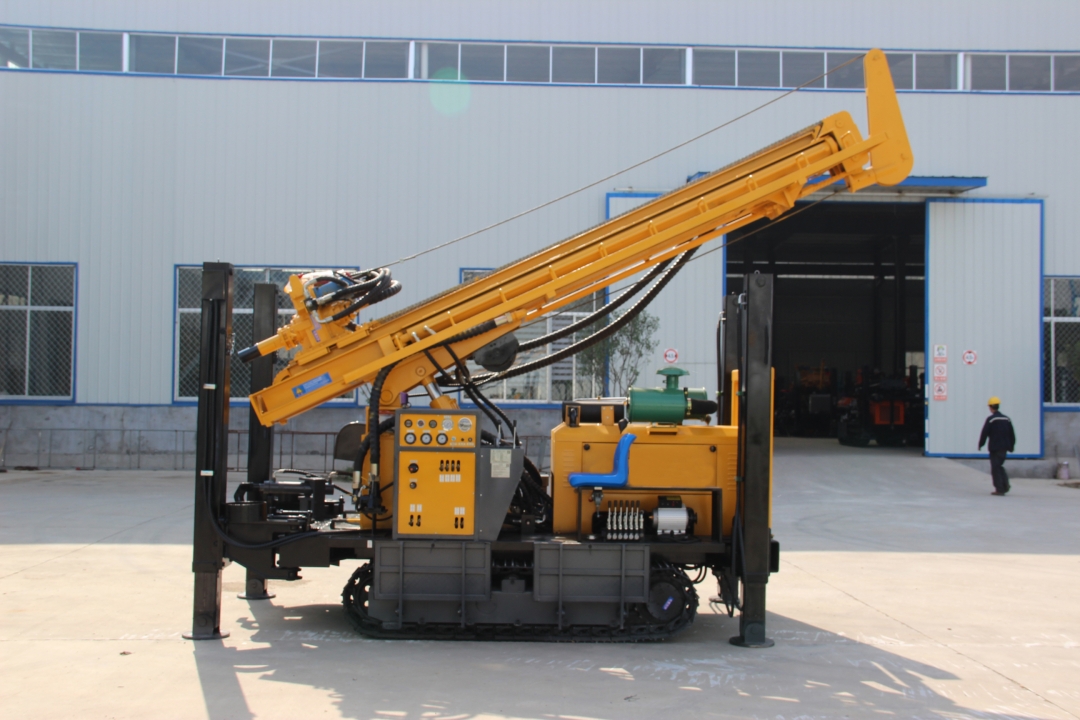
The ground is one of the biggest factors affecting drilling speed.
Soft soil, sand, or relatively easy formations can usually be drilled faster than hard rock. Difficult formations may require slower drilling, different tools, or changes to the drilling method.
If the formation changes significantly with depth, the drilling process can also become less predictable.
A deeper well naturally takes longer because more material has to be drilled and more drill rods need to be added as the borehole progresses.
However, depth alone does not tell you how long a project will take. A deep borehole through relatively easy formations may progress faster than a shallower borehole through hard rock.
A larger borehole generally requires more material to be removed, which can increase drilling time.
The required diameter also affects the drilling tools and overall equipment configuration. For this reason, both depth and diameter should be considered when estimating the project schedule.
The drilling rig and drilling method can have a significant impact on productivity.
A properly configured rig can maintain stable drilling performance and reduce unnecessary delays. For hard rock formations, for example, a suitable DTH drilling system can provide efficient rock breaking and cuttings removal.
The condition of the equipment also matters. Regular maintenance and properly matched drilling tools can help keep the drilling process moving without unnecessary interruptions.
No. Completing a water well involves more than simply reaching the target depth.
After drilling, the project may require casing installation, screen installation, borehole cleaning, well development, and testing. The exact steps depend on the well design and local requirements.
These activities can add several days to the overall project even after the drilling itself is complete.
So when planning a water well project, it is better to estimate the complete well construction schedule rather than only asking how many days the rig will spend drilling.
The best way to reduce unnecessary drilling time is to prepare the project properly before the rig arrives.
Understanding the expected geological conditions helps determine the appropriate drilling method and equipment. Choosing a rig with enough capacity for the required depth and formation can also prevent the machine from operating beyond its practical limits.
Proper drill pipes, bits, air supply, and other supporting equipment are equally important. A delay caused by unsuitable equipment or missing components can easily offset any advantage gained from a faster drilling speed.
Start with four basic factors: expected depth, borehole diameter, geological conditions, and drilling method.
From there, consider the drilling rig’s practical penetration rate under similar conditions. Then allow additional time for equipment setup, adding drill rods, casing, borehole cleaning, and well completion.
A drilling equipment supplier with experience in similar formations can usually provide a more realistic estimate than a general drilling speed quoted in a machine specification.
The right drilling rig can make a significant difference to both drilling efficiency and the overall project schedule.
Kaishan provides water well drilling rigs for different depths, formations, and project conditions. Our team can evaluate your expected drilling depth, geological conditions, borehole requirements, and project needs to recommend a suitable machine configuration.
If you are planning a water well project and need an estimate of drilling time, contact Kaishan with your project details and we can help you determine a practical equipment solution.
