 English
 Español
 Русский

A screw air compressor works by drawing in air, compressing it with two rotating screws, and delivering it as pressurized air. It is widely used in factories, construction sites, mining, and drilling projects. Unlike a piston compressor, which compresses air through repeated piston movements, a screw compressor uses two rotating parts to produce a steady flow of compressed air.
The process is easier to understand when we break it down into a few simple steps.
First, the compressor takes in air from the surrounding environment.
Before entering the main compression system, the air passes through an air filter. This filter removes dust and other particles that could damage the internal components.
Simply put, the filter keeps unwanted dirt out of the machine.
This is the most important part of a screw air compressor.
Inside the machine, there are two rotating screws called rotors. They turn in opposite directions and work together to move the air forward.
As the air enters the space between the screws, it gets trapped. The space gradually becomes smaller as the screws rotate, so the air is squeezed into a smaller volume. This increases its pressure.
Think of it as squeezing air into a smaller space. The smaller the space becomes, the higher the air pressure gets.
In an oil-injected screw compressor, oil is added during the compression process.
The oil has three main functions:
It lubricates the moving parts.
It helps remove heat generated during compression.
It helps seal small gaps inside the compression chamber.
The air and oil then leave the compression section together and move to the separation system.
Not all screw compressors use oil in the compression chamber. Oil-free models use a different design.
After compression, the air still contains some oil.
The compressor sends this mixture into an oil separator, which removes most of the oil from the compressed air. The separated oil is filtered and cooled before returning to the compression system.
This allows the oil to be reused while the compressed air continues toward the cooling system.
Compression makes the air hot, so it needs to be cooled before delivery.
The cooling system reduces the air temperature. As the air cools, some moisture turns into water and can be removed through a separator.
Finally, the compressed air flows out of the compressor and into the equipment that needs it.
That is the basic working process: air intake, compression, oil separation, cooling, and air delivery.
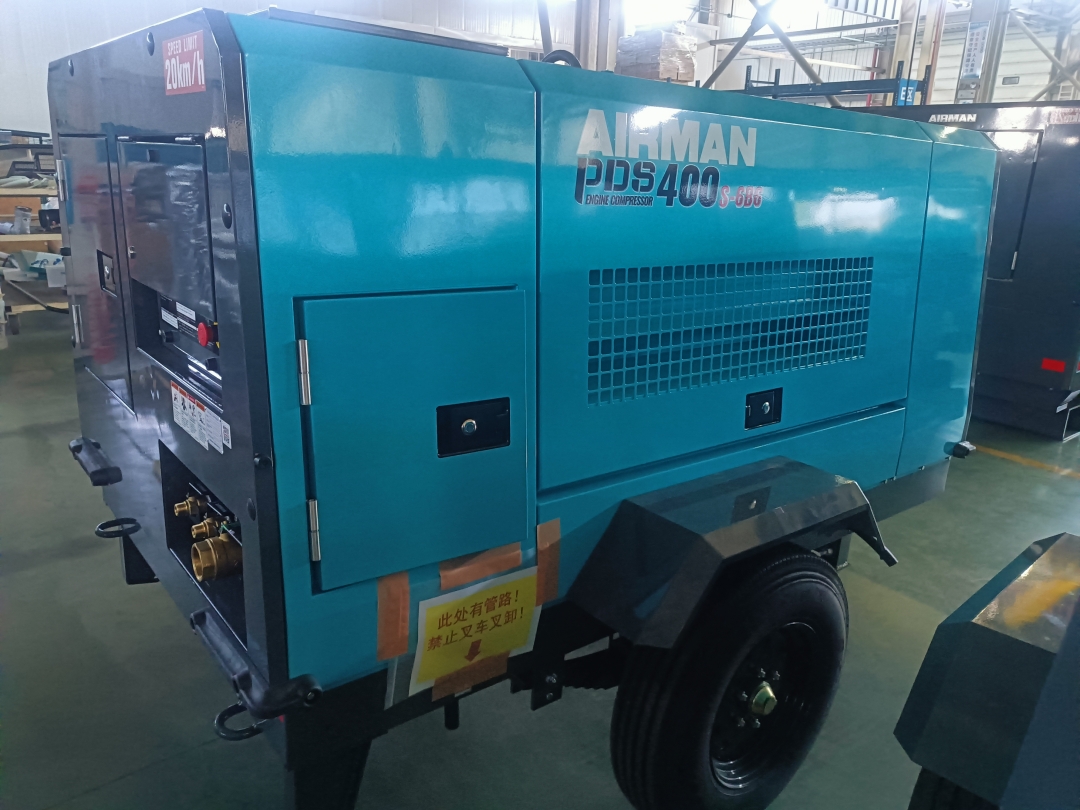
A mobile screw air compressor follows the same basic compression process, but it is designed for outdoor projects and locations where a fixed air supply is not available.
Many mobile models use a diesel engine to drive the compressor. This means they can operate independently without needing an external electrical power supply.
For drilling projects, the compressor provides the high-pressure air needed by the DTH hammer. The compressed air drives the hammer and helps remove rock cuttings from the borehole.
Kaishan offers mobile screw air compressors such as the LGCY and KSDY series. These machines are designed for outdoor applications, including mining, construction, and drilling.
Choosing an air compressor depends on the required air pressure, air delivery volume, and operating conditions. Different projects need different compressor configurations.
Kaishan offers mobile screw air compressors for various industrial and outdoor applications. Whether the compressed air is needed for drilling, construction, or other equipment, selecting a suitable model helps maintain a stable air supply.
Contact Kaishan to discuss your air supply requirements and find a suitable compressor for your project.
Yes. Screw air compressors are designed for continuous operation under suitable working conditions. However, regular maintenance, proper cooling, and correct operating parameters are important for reliable performance.
Common causes include air leaks, clogged air filters, blocked separators, and problems with the intake or pressure control system. If the compressor cannot maintain its normal pressure, these components should be checked.
Maintenance intervals depend on the compressor model, operating hours, and working environment. Air filters, oil filters, oil separators, and lubricating oil should be inspected or replaced according to the manufacturer’s maintenance schedule.
Yes, but low temperatures can affect starting, lubrication, and condensation inside the system. The correct oil grade, cold-weather starting procedures, and suitable protection are important for outdoor operation.
A mobile compressor is designed for transportation between different sites and often uses a diesel engine. A stationary compressor is generally installed in a fixed location and commonly uses an electric motor.
