 English
 Español
 Русский

The right DTH hammer size depends mainly on the required hole diameter, rock conditions, drilling depth, and available air supply. A larger hammer is generally matched with a larger drill bit and requires more compressed air, while a smaller hammer is suitable for smaller holes and lower air consumption requirements. Before choosing a DTH hammer, buyers should check the compatibility of the hammer, drill bit, drill pipe, and air compressor to ensure the entire drilling system works properly.
Hole diameter is usually the first factor to consider when selecting a DTH hammer. Different hammer sizes are designed to work with specific drill bit diameter ranges.
If the hammer is too small for the required hole, it may not provide the impact energy needed for efficient rock breaking. If the hammer is too large, it may not fit the required drilling configuration and can increase air consumption and equipment costs.
When selecting a hammer, check the manufacturer’s recommended bit diameter range. The hammer, bit, and drill pipe should be compatible rather than selected separately.
For example, a project requiring a 90 mm hole has different equipment requirements from one requiring a 180 mm hole. The correct hammer should be selected according to the complete drilling configuration.
Rock conditions also affect DTH hammer selection.
Hard and abrasive formations generally require a suitable hammer and bit combination capable of delivering consistent impact energy. Softer formations may not require the same impact capacity, but flushing performance and drilling stability remain important.
Drilling depth is another consideration. As the hole becomes deeper, removing rock cuttings becomes more challenging. The hammer and compressor must provide sufficient air performance to maintain effective impact and flushing.
For deeper drilling projects, buyers should pay particular attention to air pressure, air volume, drill pipe dimensions, and the compatibility of the complete system.
A DTH hammer uses compressed air to generate impact energy and help remove rock cuttings from the hole. Therefore, choosing the right hammer also means choosing an appropriate air compressor.
Two compressor specifications are particularly important:
Working pressure: The compressor must provide sufficient pressure for the selected hammer to operate properly.
Air delivery volume: The compressor must supply enough air to operate the hammer and remove cuttings from the hole.
A compressor with high pressure but insufficient air volume may not provide the required drilling performance. Likewise, sufficient air volume cannot compensate for inadequate working pressure.
The required air supply also changes with hole diameter, drilling depth, drill pipe configuration, and air hose length. Always check the hammer manufacturer’s recommended operating conditions before selecting a compressor.
A DTH hammer does not operate independently. Its performance depends on several connected components.
The drill bit must match the hammer’s connection and recommended diameter range. The drill pipe must have compatible dimensions and thread specifications. The compressor must provide the required pressure and air volume.
Buyers should also consider the drilling rig’s rotation torque, feed force, and available air supply. A suitable hammer cannot deliver its expected performance if the supporting equipment is not properly matched.
Before placing an order, it is worth confirming the following specifications:
|
Component |
What to Check |
|
DTH Hammer |
Hammer model, outside diameter, operating pressure and air consumption |
|
Drill Bit |
Bit diameter, button design and hammer compatibility |
|
Drill Pipe |
Pipe diameter, length and thread connection |
|
Air Compressor |
Working pressure and air delivery volume |
|
Drilling Rig |
Rotation torque, feed force and air supply configuration |
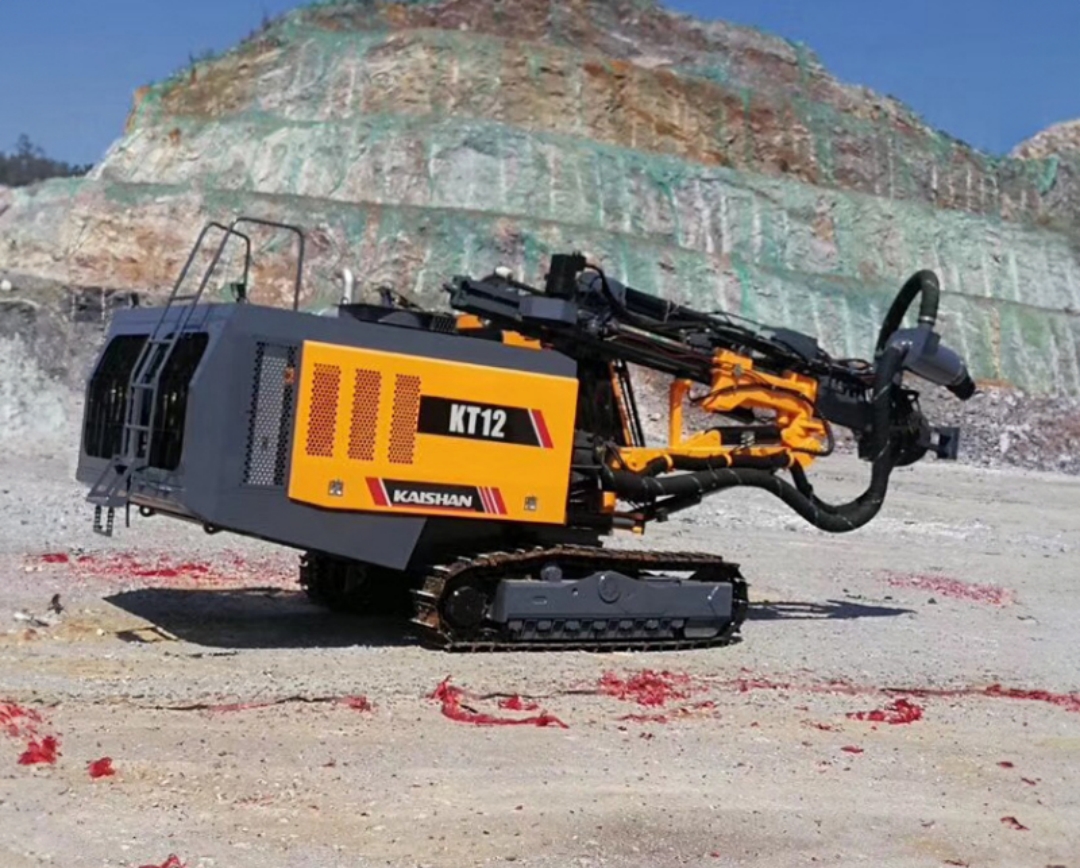
Kaishan offers several DTH drilling rig models with different hammer configurations. The following examples show how hammer selection relates to the overall equipment setup.
|
Drilling Rig |
Compatible DTH Hammer |
Drilling Diameter |
Economical Drilling Depth |
|
KT12 |
K40 / K50 |
115–152 mm |
28 m |
|
KT15C |
K4 / K5 / K6 |
140–190 mm |
36 m |
|
KG520 / KG520H |
K40 |
105–152 mm |
25 m |
|
KG430 / KG430H |
K40 |
90–152 mm |
25 m |
The KT12 is equipped with a built-in compressor delivering 20 m³/min at 22 bar, while the KT15C provides 22 m³/min at 24 bar. These integrated configurations combine the drilling rig and compressor into one machine.
For buyers comparing different DTH drilling systems, the important point is to look beyond the hammer model. Hole diameter, compressor performance, drilling depth, and the supporting components all need to match the project.
Kaishan provides integrated and crawler-type DTH drilling rigs for different rock drilling requirements. Models such as the KT12, KT15C, KG430, and KG520 offer different drilling diameter ranges, compressor configurations, and hammer options.
When selecting equipment, buyers should provide the required hole diameter, drilling depth, rock conditions, and available air supply. This information helps determine a suitable combination of drilling rig, DTH hammer, drill bit, and compressor.
Contact Kaishan to discuss your drilling requirements and find a suitable DTH drilling configuration for your project.
No. A larger hammer can deliver greater impact energy, but drilling speed also depends on rock conditions, air supply, bit design, and operating parameters. Selecting a hammer that is too large for the project may increase air consumption without improving overall efficiency.
Check the hammer manufacturer’s recommended bit diameter range and connection specifications. The bit must match the hammer in both size and connection type.
Some hammers support a range of compatible bit diameters, but the available range depends on the hammer design. Always follow the manufacturer’s specifications rather than assuming that one hammer can handle every hole size.
Generally, larger hammers require greater air supply, but the actual requirement depends on the hammer model and operating conditions. Check both working pressure and air delivery volume before choosing a compressor.
Provide the required hole diameter, rock type, drilling depth, existing drill pipe specifications, and compressor pressure and air delivery volume. These details help the supplier recommend a compatible hammer and bit combination.
