 English
 Español
 Русский

Reverse circulation drilling is a drilling method that uses a double-wall drill pipe and compressed air to bring rock cuttings from the bottom of the borehole back to the surface through the inner tube. Unlike conventional rotary drilling, where drilling fluid or air mainly circulates down through the drill pipe and returns around the outside, reverse circulation drilling creates an upward sample path inside the drill string. This makes it particularly useful for mineral exploration, open-pit mining, and projects where fast and reliable rock sample collection is important.
Reverse circulation drilling, often called RC drilling, is a drilling method designed to recover rock cuttings continuously during drilling.
The main difference is the direction of sample return. Compressed air travels down through the annular space between the inner and outer tubes of the double-wall drill pipe. At the bottom of the hole, the airflow enters the drilling area and carries broken rock upward through the inner tube.
The cuttings then travel directly to the surface, where they can be collected and analyzed.
Because the samples travel through the inner tube instead of moving upward through the open space around the drill string, the drilling system can provide a relatively direct and controlled path for sample recovery.
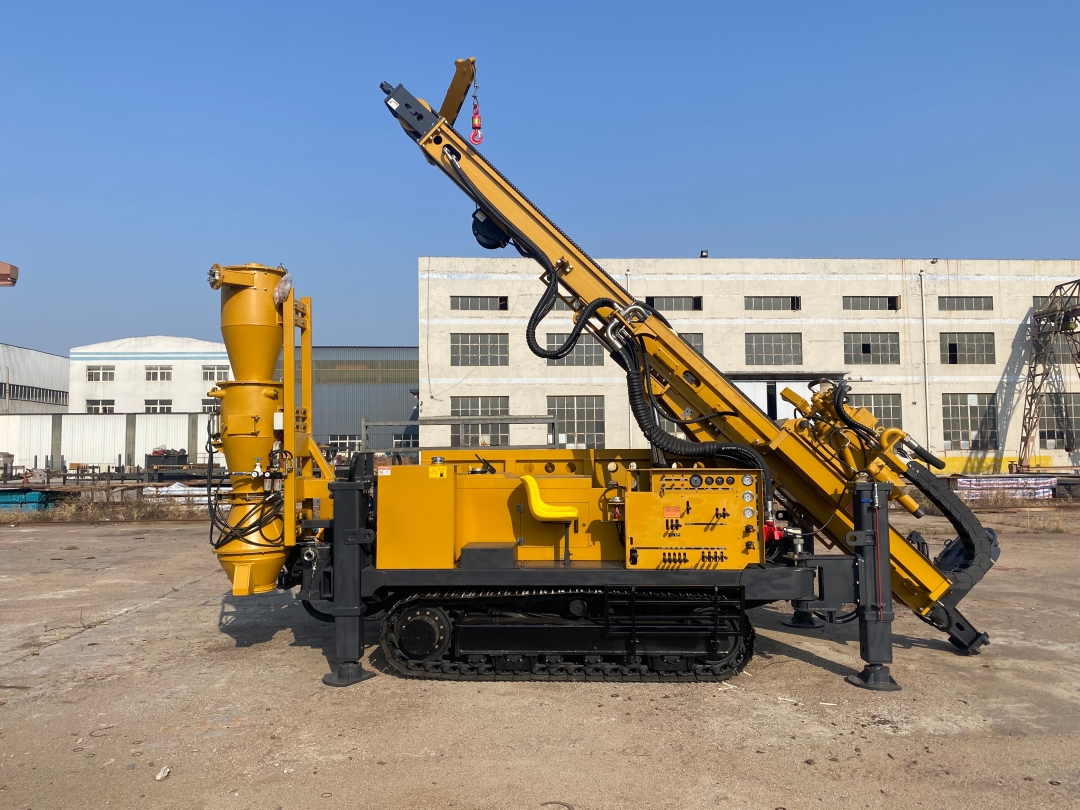
The reverse circulation drilling process starts when the drill bit breaks the formation at the bottom of the borehole. At the same time, compressed air is supplied into the double-wall drill pipe.
The air moves downward through the space between the inner and outer pipes. When it reaches the bottom of the hole, the airflow picks up the rock cuttings produced by the drill bit.
The cuttings then enter the inner tube and are carried upward to the surface. Once they reach the surface, the samples can be collected for geological analysis and mineral evaluation.
In simple terms, the circulation path is:
Compressed air → double-wall drill pipe → bottom of borehole → rock cuttings → inner tube → surface
This circulation system is the key feature that distinguishes reverse circulation drilling from many conventional rotary drilling methods.
A reverse circulation drilling rig combines several systems to maintain drilling, air circulation, and sample recovery.
Double-wall drill pipes are essential to the RC system. The two concentric tubes create separate passages for compressed air and returning rock cuttings.
The drill bit breaks the formation at the bottom of the borehole. Its design is selected according to the required hole diameter and geological conditions.
The air circulation system supplies compressed air to transport the cuttings back to the surface. Proper air capacity and pressure are important for maintaining effective sample return.
The rotary system provides the torque and rotation required to turn the drill string and bit.
The feeding and lifting system controls the drill string during penetration and rod handling.
Together, these systems allow the rig to drill while continuously transporting cuttings to the surface.
Reverse circulation drilling is widely associated with mineral exploration and open-pit mining. The method is useful when drilling needs to produce continuous rock cuttings for geological investigation and ore-grade evaluation.
During exploration, the returned cuttings can provide information about the formation and mineral distribution encountered at different depths. Because the samples are transported through the inner tube, the system is designed to reduce direct contact between the returned cuttings and the surrounding drilling fluid.
Kaishan’s RC500 Reverse Circulation Drilling Rig, for example, is designed for open-pit mineral sampling, ore grade testing, geological prospecting, and mining exploration projects. It has a maximum drilling depth of 500 m and a maximum drilling diameter of Φ400 mm.
The main difference is the way drilling cuttings are transported back to the surface.
|
Feature |
Reverse Circulation Drilling |
Conventional Rotary Drilling |
|
Sample return path |
Through the inner tube |
Mainly through the annular space |
|
Drill pipe |
Double-wall drill pipe |
Usually single-wall drill pipe |
|
Cuttings transport |
Mainly compressed air circulation |
Drilling fluid or air circulation |
|
Sample recovery |
Continuous rock cuttings |
Depends on drilling method and circulation system |
|
Typical applications |
Mineral exploration, ore sampling, geological prospecting |
Water wells, construction, exploration, and other drilling applications |
Reverse circulation drilling is therefore particularly useful when sample collection is an important part of the drilling process. Conventional rotary drilling remains suitable for many other applications where continuous RC-style sample recovery is not the primary requirement.
The Kaishan RC500 is designed for reverse circulation drilling in open-pit mineral sampling and mining exploration projects.
Its reverse circulation system uses high-pressure compressed air to transport cuttings from the bottom of the borehole through the inner tube of the double-wall drill pipe. The machine also uses a hydraulic drilling system with adjustable rotary torque and feed force.
The RC500 has a maximum drilling depth of 500 m and supports drilling diameters up to Φ400 mm. Its rated power is 132 kW and its lifting force is 28 T.
|
Drilling |
Model |
RC500 |
|
Maximum drilling depth |
500 m |
|
|
Maximum drilling diameter |
Φ400 mm |
|
|
Drill rod diameter |
89 / 102 mm |
|
|
Maximum feeding stroke |
3,600 mm |
|
|
Feeding force |
10 T |
|
|
Power & Rotary System |
Rated power |
132 kW |
|
Lifting force |
28 T |
|
|
Rotary torque |
5,500 / 11,000 N·m |
|
|
Rotary speed |
70 / 140 r/min |
|
|
Mobility |
Travel speed |
2.5 km/h |
|
Grade ability |
21° |
|
|
Transport dimensions |
6,860 × 2,200 × 2,620 mm |
|
|
Machine |
Weight |
10.5 T |
|
Optional accessories |
Welding generator, foam pump, etc. |
For projects with lower drilling depth requirements, Kaishan also offers the RC300 Reverse Circulation Drilling Rig, which has a maximum drilling depth of 300 m, maximum drilling diameter of Φ350 mm, and rated power of 92 kW.
Reverse circulation drilling provides a practical combination of drilling and continuous sample recovery. The double-wall drill pipe creates a dedicated return path for rock cuttings, while compressed air helps transport the samples to the surface.
This makes RC drilling particularly suitable for mineral exploration projects where geological information and sample quality are important. The appropriate rig still depends on drilling depth, hole diameter, geological conditions, required sample recovery, and project configuration.
Kaishan offers RC300 and RC500 reverse circulation drilling rigs for different mineral exploration and geological prospecting requirements. The two models provide different drilling capacities, allowing the rig configuration to be matched to the specific project.
Reverse circulation drilling is a drilling method that uses double-wall drill pipes and compressed air to transport rock cuttings from the bottom of a borehole to the surface through the inner tube.
The drill bit breaks the rock at the bottom of the borehole, while compressed air carries the resulting cuttings into the inner tube of the double-wall drill pipe and transports them to the surface.
RC drilling is mainly used for mineral exploration, open-pit mineral sampling, ore grade testing, and geological prospecting.
The main difference is the cuttings return path. RC drilling sends the cuttings upward through the inner tube of a double-wall drill pipe, while conventional rotary drilling generally returns cuttings through the annular space around the drill string.
The Kaishan RC500 has a maximum drilling depth of 500 m and a maximum drilling diameter of Φ400 mm.
Yes. Kaishan currently offers the RC300 and RC500 Reverse Circulation Drilling Rigs, with different drilling capacities for mineral exploration and geological prospecting projects.
