 English
 Español
 Русский

DTH drilling requires high-pressure compressed air because the air powers the down-the-hole hammer and helps remove broken rock from the borehole. Unlike top-hammer drilling, where the impact mechanism is located at the surface, a DTH hammer operates directly behind the drill bit, deep inside the hole. Compressed air travels through the drill rods to drive the hammer’s internal piston. After producing the impact, the air also carries rock cuttings back to the surface. This means the air compressor is not simply an accessory. It is an essential part of the DTH drilling system.
A DTH hammer uses compressed air to move an internal piston back and forth. The piston repeatedly strikes the drill bit, which breaks the surrounding rock into smaller pieces.
The process is relatively straightforward:
The air compressor produces high-pressure compressed air.
Air travels through the drill pipe to the DTH hammer at the bottom of the borehole.
The air drives the hammer piston, creating repeated impacts on the drill bit.
The exhaust air passes through the bit and helps carry rock cuttings out of the hole.
This is why air pressure matters. If the pressure is too low, the hammer may not operate at its intended performance level. Drilling speed can decrease, particularly when working in hard rock.
The main purpose of high air pressure is to provide enough energy for the hammer to break rock efficiently.
When the compressed air enters the hammer, it drives the piston through repeated impact cycles. The pressure available to the hammer affects its impact performance. If the air supply cannot maintain the required pressure, the hammer may deliver weaker or less consistent impacts.
This becomes particularly important when drilling hard rock or deeper holes. As the hole gets deeper, air must travel through a longer drill string, and pressure losses become more significant. Water inside the borehole and the resistance created by rock cuttings can also make it harder for exhaust air to return to the surface.
However, higher pressure does not automatically mean better drilling. The hammer has a recommended operating pressure range, and the compressor must supply enough air volume at that pressure. Both conditions need to be satisfied.
These two specifications are often confused when selecting an air compressor for DTH drilling.
Air pressure, usually measured in bar or MPa, indicates the pressure of the compressed air. It provides the force needed to operate the hammer.
Air volume, usually measured in m³/min, indicates how much compressed air the compressor can deliver per minute. The hammer consumes this air during operation, while the exhaust air also needs enough flow to remove rock cuttings from the borehole.
For example, a compressor may provide high pressure but insufficient air volume. In this case, the hammer may not receive enough air to operate properly, and cuttings may not be removed efficiently.
The opposite situation can also occur. A compressor may deliver a large volume of air but fail to reach the pressure required by the hammer.
For this reason, compressor selection should always consider pressure and air volume together.
The right air compressor depends on several factors, including the DTH hammer model, drilling diameter, hole depth, and rock conditions.
Before selecting a compressor, check the following:
Hammer requirements: Different hammer sizes and designs have different air pressure and consumption requirements.
Drilling diameter: Larger holes generally require more air to remove rock cuttings effectively.
Drilling depth: Deeper holes may require additional pressure to overcome air losses and back pressure.
Rock conditions: Hard rock and changing geological conditions can affect the required drilling performance.
Air delivery: The compressor must provide sufficient air volume at the required working pressure, not just reach the pressure shown in its specifications.
It is also important to check the compressor’s actual rated air delivery at the selected pressure. A pressure rating alone does not tell you whether the machine can supply enough air for a particular hammer.
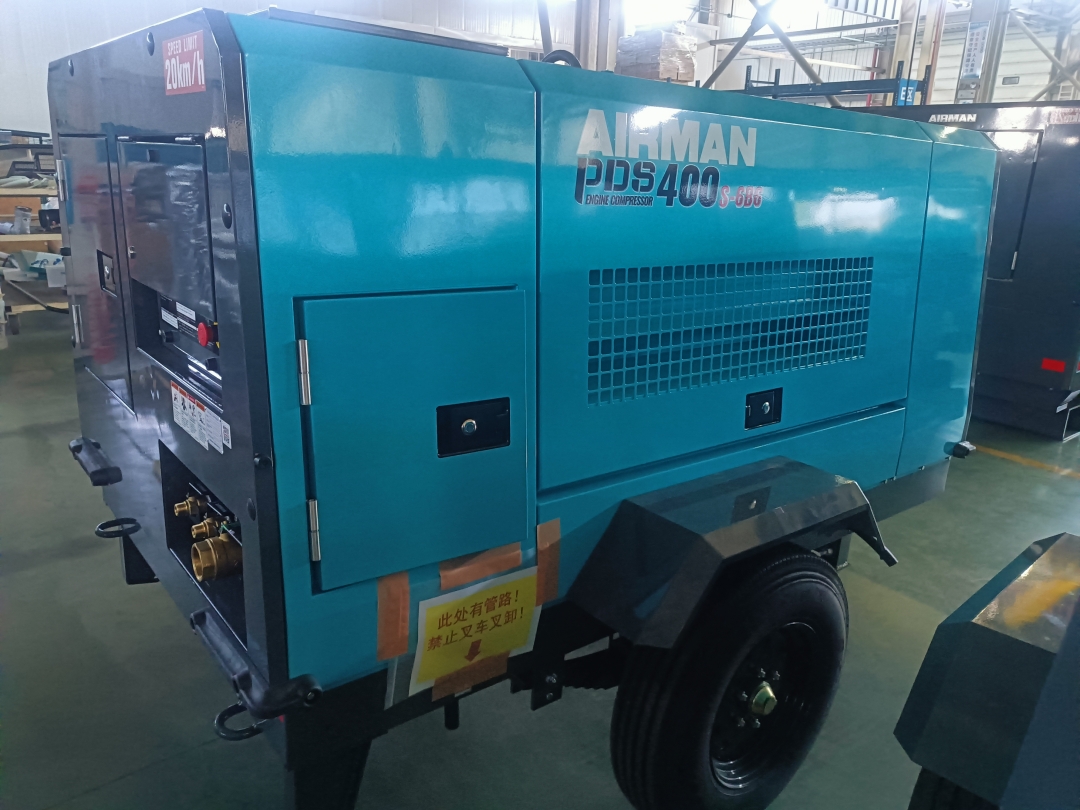
Mobile screw air compressors are commonly used in DTH drilling because they can provide the high-pressure air supply required by drilling equipment and can be transported between drilling locations.
Kaishan offers several mobile compressor configurations for different pressure and air-volume requirements.
For example, the KSDY mobile screw air compressor series includes models with different combinations of pressure and air delivery:
|
Model |
Discharge Pressure |
Air Capacity |
|
KSDY-13/14.5 |
14.5 bar |
13 m³/min |
|
KSDY-15/17 |
17 bar |
15 m³/min |
|
KSDY-22/18-II |
18 bar |
22 m³/min |
These models illustrate how compressor pressure and air capacity vary across a product range. The correct configuration still needs to be matched with the selected hammer and drilling conditions.
For operations requiring higher pressure and air volume, Kaishan also offers integrated DTH drilling rigs with built-in screw compressors.
For example, the KT15C Integrated DTH Drill Rig has a built-in compressor rated at 22 m³/min and 24 bar. It supports drilling diameters of 140–190 mm and has an economical drilling depth of 36 m.
An integrated rig combines the drilling system and compressor in one machine, while a separate compressor setup provides more flexibility in equipment configuration. The better option depends on the drilling site, required mobility, and operating conditions.
Using an undersized compressor can affect both drilling performance and equipment operation.
If the compressor cannot maintain the required pressure, the DTH hammer may produce weaker impacts and drilling can become slower. If the air volume is insufficient, rock cuttings may not be carried out of the hole effectively.
Cuttings can then accumulate around the drill bit, making drilling less efficient and increasing the risk of problems such as bit jamming.
A compressor that is too large is not necessarily a better choice either. Excess capacity can increase equipment and fuel costs without providing a meaningful improvement if the hammer cannot use the additional air.
The goal is to select a compressor that matches the actual requirements of the drilling system.
DTH drilling requires enough air pressure to operate the selected hammer. The exact requirement depends on the hammer design and model. Different hammers operate at different pressure ranges.
Yes. Air pressure powers the hammer, while air volume supplies the hammer and helps remove cuttings from the hole. Both must meet the requirements of the drilling system.
Not every air compressor is suitable. The compressor must provide the pressure and air volume required by the DTH hammer. A standard low-pressure compressor may not meet these requirements.
Not necessarily a more powerful machine in every case, but deeper drilling can require greater pressure or additional air capacity because of pressure losses and back pressure. The final configuration depends on hole diameter, depth, water conditions, and hammer requirements.
An integrated DTH rig has its own built-in air compressor, so the drilling system and air supply are combined in one machine. This can simplify equipment arrangement and transportation at the drilling site.
