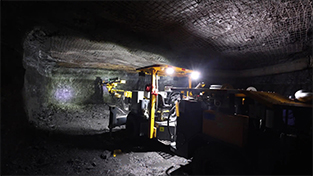
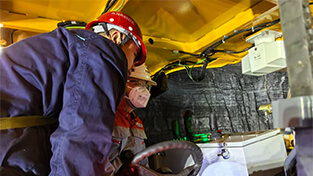
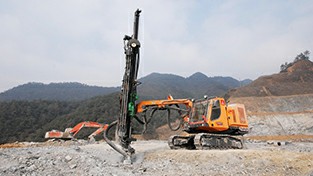
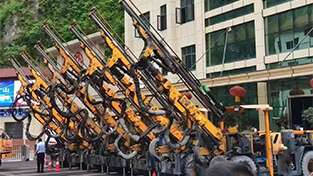
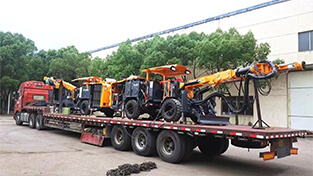
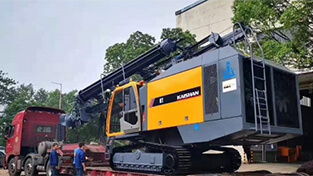
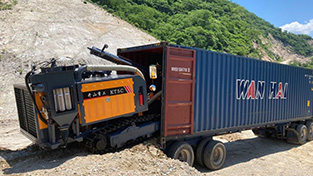
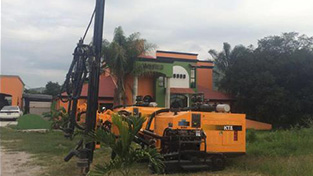
The operation of DTH rig should note: 1, always pay attention to check the gas and water (water dust removal) road sections of screw, nut, joint connection and fastening frame and host. 2, pay attention to the oil mist detector at work, check the lubrication condition of wind motor, impact device. 3, intervals, clean with gasoline or diesel, wind motor, observe motor damage of the blade. 4, do not allow the reverse when drilling, lest the drill pipe tripping. 5, the machine in a short period of time to stop work, to give a small amount of compressed air, to avoid sediment impact device inside, if in a long time to stop work, impact device must be mentioned from 1-2 meters shall be fixed at the bottom of the bore. 6, the work should pay attention to the voice of the impacter and the workings of the machine is normal, found abnormal phenomenon should immediately stop check. 7, add a new drill pipe, it is important to pay special attention to the drill pipe inside clean, to avoid sand mixed with percussive internal attaint parts or outage accidents. (general use compressed air to blow, wash several times). 8, surface water,...
 English
 Español
 Русский