 English
 Español
 Русский

Planning an RC drilling program involves more than selecting a drilling rig and deciding how deep to drill. A successful mineral exploration program needs a clear geological objective, a well-designed drill hole layout, suitable equipment, and a reliable sampling procedure. Each stage affects the quality of the geological information collected and the decisions that can be made from it.
Reverse circulation (RC) drilling is widely used in mineral exploration because it can collect rock cuttings from different depths for geological logging and laboratory analysis. Here are the main steps to consider when planning an RC drilling program.
Before arranging drilling equipment, the exploration team needs to establish what the program is intended to investigate.
For example, a project may aim to:
Investigate a previously identified mineralized zone.
Determine the depth and distribution of a potential ore body.
Test geological targets identified through surface mapping or geophysical surveys.
Collect samples for preliminary ore-grade evaluation.
Extend the known boundaries of a mineral deposit.
The objective determines how the drilling program should be designed. An early-stage exploration program may focus on testing several geological targets, while a follow-up program may concentrate on defining the size and continuity of a mineralized zone.
Geological information from previous surveys, surface samples, trenching, and earlier drilling should be reviewed before new boreholes are planned.
Once the exploration targets are identified, geologists can determine where the drill holes should be located.
The layout depends on the geological structure, the expected position of mineralization, and the amount of information needed from the drilling program.
Several factors need to be considered:
Drill hole location: Each hole should test a specific geological target. Surface coordinates should be recorded accurately so that drilling results can be compared with geological maps and previous exploration data.
Drilling depth: The planned depth should be sufficient to investigate the target zone and, where necessary, the surrounding formations. It should be based on geological expectations rather than simply the maximum capacity of the available rig.
Drilling angle and direction: Vertical holes may be suitable for some targets, while inclined holes can help investigate dipping or structurally controlled mineralization.
Hole spacing: The distance between boreholes depends on the exploration stage, geological complexity, and the level of detail required. Early-stage programs may use wider spacing to test regional targets, while more detailed drilling may require closer spacing.
The drill hole layout should also be reviewed as results become available. If initial samples indicate unexpected geological conditions, the exploration team may need to adjust the position or direction of subsequent holes.
The drilling rig needs to match the planned hole dimensions, depth, geological conditions, and site requirements.
Maximum drilling depth and drilling diameter are important starting points, but they should not be the only specifications considered. Rated power, lifting capacity, feeding force, rotary torque, and equipment mobility can also affect how efficiently the rig operates.
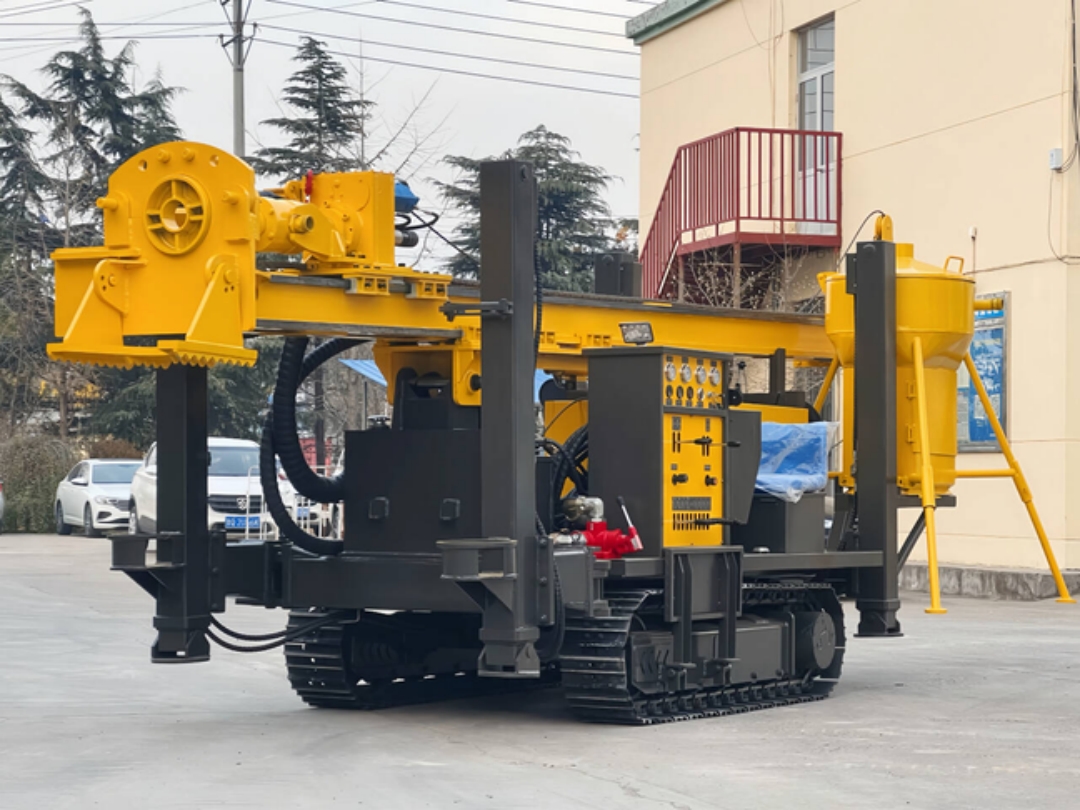
For example, Kaishan offers two RC drilling rig models for different exploration requirements:
|
Technical Parameters |
RC300 |
RC500 |
|
Maximum drilling depth |
300 m |
500 m |
|
Maximum drilling diameter |
Φ350 mm |
Φ400 mm |
|
Rated power |
92 kW |
132 kW |
|
Lifting force |
20 T |
28 T |
The RC300 Reverse Circulation Drilling Rig is designed for open-pit mineral sampling, ore-grade inspection, and geological prospecting. Its maximum drilling depth is 300 m, making it an option for exploration programs within that drilling range.
For projects requiring greater drilling capacity, the RC500 Reverse Circulation Drilling Rig offers a maximum drilling depth of 500 m and a maximum drilling diameter of Φ400 mm. Its rated power is 132 kW, with a lifting force of 28 T.
These specifications are maximum equipment ratings, not guaranteed drilling results in every formation. Actual performance depends on geological conditions, drilling configuration, and operating practices.
Before choosing a model, the exploration team should confirm the planned hole dimensions and discuss the site conditions with the equipment supplier.
Sample collection is one of the most important parts of an RC drilling program. The purpose is not simply to bring rock cuttings to the surface, but to obtain samples that can be reliably associated with their original depth intervals.
In RC drilling, compressed air transports cuttings from the bottom of the borehole through the inner tube of the double-wall drill pipe. The material is then directed through a sampling system for collection.
A sampling procedure should define:
The sampling interval for each borehole.
How samples will be collected and divided.
How sample bags will be labeled and recorded.
How samples will be stored and transported.
Which portions of the material will be retained for future reference.
Sample intervals should be selected according to the geological objectives and project protocol. Each sample needs a unique identification number linked to the corresponding borehole and depth interval.
A consistent procedure helps geologists compare results between different holes and identify changes in mineralization along the drilling path.
A drilling program can produce a large number of samples, but the results are only useful if sample quality and laboratory data are properly controlled.
Quality assurance and quality control, commonly called QA/QC, should be included in the exploration plan from the beginning.
Depending on the project requirements, the procedure may include:
Sample duplicates: Duplicate samples help evaluate sampling and analytical repeatability.
Certified reference materials: Reference materials with known values are used to check the accuracy of laboratory analysis.
Blank samples: Blank material helps identify possible contamination during sample preparation and analysis.
Sample tracking: Records should connect each sample to its borehole, depth interval, collection date, and laboratory results.
The frequency and type of QA/QC samples should follow the project’s quality control protocol and the requirements of the geological team. They should not be added randomly after drilling has started.
It is also important to monitor sample recovery and possible contamination during drilling. Problems with the sampling system or inconsistent operating conditions can affect the representativeness of the collected material.
Drilling records should be maintained throughout the program.
For each borehole, the exploration team should record its location, planned and actual depth, drilling direction, geological observations, and any changes in operating conditions.
Geologists should log the recovered rock cuttings, noting changes in lithology, alteration, mineralization, and other relevant geological features.
Drill hole deviation may also need to be measured, particularly for deeper or inclined holes. The actual position of the borehole at depth can differ from its planned trajectory, so downhole survey information may be important when interpreting exploration results.
Regularly reviewing drilling progress helps the team identify unexpected formations, adjust the program where necessary, and avoid continuing with a drilling layout that no longer matches the geological evidence.
After samples are collected, they are sent for laboratory analysis according to the project’s testing requirements.
The analytical results are combined with geological logging, borehole locations, drilling depths, and survey information. Together, these data help geologists evaluate mineralization and understand how it is distributed across the exploration area.
The results may indicate that:
A potential mineralized zone requires further investigation.
The geological target extends beyond the original drilling area.
Additional holes are needed to clarify the depth or boundaries of mineralization.
Some targets do not justify further drilling based on the available evidence.
An RC drilling program should therefore be treated as an ongoing exploration process rather than a fixed list of boreholes. Each round of drilling should provide information that helps guide the next stage.
A well-planned RC drilling program combines geological design, suitable equipment, consistent sampling, and reliable data management.
The drilling rig is an important part of this process, but its specifications must match the actual exploration requirements. Choosing a machine with a greater maximum depth does not automatically produce better exploration results. The drilling method, hole design, sample collection procedure, and geological interpretation all matter.
Kaishan provides RC300 and RC500 reverse circulation drilling rigs for mineral sampling, ore-grade testing, and geological prospecting. The two models offer different drilling capacities for exploration projects.
If you are planning an RC drilling program, Kaishan can help you identify a suitable rig based on the target drilling depth, hole diameter, geological conditions, and site requirements.
The exploration team should prepare geological information, exploration targets, planned borehole locations, drilling depths, hole diameters, and sampling requirements. Site access and equipment specifications should also be reviewed.
Drill hole spacing depends on the geological structure, exploration stage, mineralization characteristics, and the level of detail required. There is no universal spacing that applies to every mineral exploration project.
Compressed air transports rock cuttings from the bottom of the borehole through the inner tube of the double-wall drill pipe. The cuttings are then directed through a sampling system, divided into the required intervals, and collected for geological logging and laboratory analysis.
Sample quality affects how reliably laboratory results represent the underground formation. Poor sample recovery, contamination, or incorrect depth labeling can lead to misleading geological interpretations.
The RC300 has a maximum drilling depth of 300 m, while the RC500 has a maximum drilling depth of 500 m. The suitable model depends on the planned drilling depth, hole diameter, geological conditions, and project configuration.
