 English
 Español
 Русский

Choosing a core drilling rig starts with understanding the drilling project, not simply selecting a machine with the greatest drilling depth. The right rig needs to match the required hole depth and diameter, geological conditions, core sampling requirements, and jobsite layout. These factors affect drilling performance, sample quality, and how smoothly the equipment can operate in the field.
Before purchasing a core drilling rig, buyers should define the project requirements and compare equipment specifications against the actual working conditions.
Drilling depth is one of the first specifications to check. A rig designed for shallow exploration may not be suitable for a project that requires deeper boreholes. However, maximum drilling depth alone does not tell the whole story.
Core drilling capacity is often specified according to different drill rod and core tube sizes, such as BTW, NTW, and HTW. The achievable depth can vary with the selected size and drilling configuration. Buyers should confirm the required depth for the specific core size rather than relying only on the headline maximum depth.
Hole diameter also matters. A larger hole may be required for certain sampling programs or project specifications, while smaller core sizes can be suitable for other exploration tasks. The rig, drill rods, core barrel, and core bit need to be compatible with the required borehole dimensions.
Before comparing models, prepare the target drilling depth, required core size, and expected borehole diameter for the project.
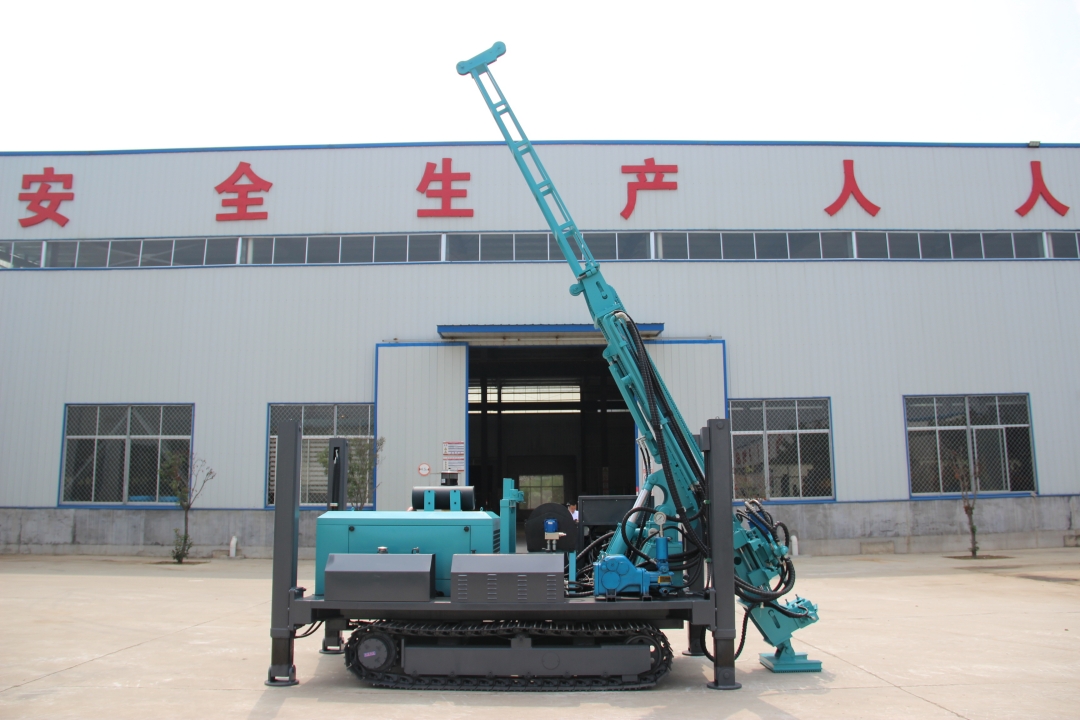
Different formations place different demands on a drilling rig.
Hard, abrasive rock can increase wear on drilling tools and require stable power and torque. Fractured or broken formations may make core recovery more difficult, while changing rock conditions can require adjustments to drilling speed, pressure, and sampling methods.
Buyers should consider:
The expected rock types and hardness
Whether the formation is fractured, broken, or highly variable
The required core recovery and sample quality
Whether the borehole may need to pass through several different formations
A rig should be selected based on the actual geological conditions and the required drilling method. If the project involves complex formations, it is useful to discuss the geological information and sampling requirements with the equipment supplier before finalizing the configuration.
The purpose of core drilling is to recover rock samples for examination. The drilling rig must therefore work with a suitable core sampling system.
Before purchasing, confirm the required core size and the compatible drill rods, core barrel, core bit, and related components. The sampling system should match the rig’s operating capacity and the project’s geological requirements.
It is also important to clarify what the project considers an acceptable core sample. Some exploration programs require continuous, intact core sections, while others may focus on obtaining samples from specific intervals. These requirements can affect the selection of drilling tools and operating procedures.
A suitable rig is only one part of the sampling system. Compatible tools and proper drilling practices are also essential for achieving the required sample quality.
The drilling location can influence the equipment choice as much as the drilling specifications.
For projects in remote or rugged areas, buyers should consider how the rig will be transported, positioned, and moved between boreholes. A crawler-mounted rig may be useful where the machine needs to travel across uneven ground, while the site layout and available access routes can affect the overall equipment dimensions.
Check the following before purchase:
Jobsite access and transport restrictions
Ground conditions and available working space
Required drilling angle
Rig dimensions and operating weight
Whether the machine needs to move frequently between boreholes
A rig that meets the depth requirement but cannot be positioned efficiently at the site may create unnecessary delays. Site conditions should be considered early in the selection process.
The power system and drilling performance should match the project’s expected workload.
Rated power indicates the available power output, while torque and rotational speed affect how the drilling system operates under different conditions. Feed force and lifting capacity are also important when drilling deeper boreholes or handling drill rods.
Instead of comparing one specification in isolation, buyers should review the full set of operating parameters. The rig needs to provide suitable performance for the required depth, core size, and geological conditions.
It is also worth checking how the machine’s control system allows operators to monitor and adjust drilling parameters. Stable control can help maintain consistent drilling operation and support the required core sampling process.
A drilling rig may require additional equipment to complete the project. Before purchasing, confirm which components are included in the proposed configuration and which need to be supplied separately.
Depending on the project, the required equipment may include:
Drill rods and core barrels
Core bits and other drilling tools
Rod handling and clamping equipment
Hydraulic or other supporting systems
Components required for the specified drilling method
Compatibility is important. The accessories should match the rig’s specifications and the project’s core size. Buyers should also clarify the supply scope to avoid discovering that essential components are missing after the equipment arrives.
The purchase decision should account for how the rig will be maintained during the project.
Check whether routine inspection points are accessible, what maintenance tasks are required, and whether replacement parts can be obtained when needed. The machine’s layout and the availability of technical support can affect how quickly maintenance work is completed.
For projects in remote locations, it is especially important to understand the maintenance requirements before the rig is shipped. Buyers should confirm the recommended maintenance schedule, the availability of operating documentation, and the process for obtaining technical assistance.
A rig that is suitable for the project should not only meet the drilling requirements but also be practical to operate and maintain throughout its service life.
Kaishan offers core drilling rigs for different drilling depth requirements. The JY300, JY600, and JY800 models provide examples of different equipment capacities.
|
Model |
Drilling Depth BTW |
Drilling Depth NTW |
|
JY300 |
300 m |
300 m |
|
JY600 |
650 m |
600 m |
|
JY800 |
1,000 m |
800 m |
The JY300 is a compact option for projects with more moderate drilling depth requirements. The JY600 and JY800 provide greater drilling capacity for deeper exploration work.
These figures are model specifications, not guaranteed drilling results for every site. Actual drilling depth and performance depend on the selected core size, geological conditions, drilling configuration, and operating practices.
When comparing models, buyers should first identify the required depth and core size, then check whether the rig’s power, torque, lifting capacity, and configuration are suitable for the project.
The right core drilling rig depends on more than a single specification. Drilling depth, core size, geological conditions, site access, and the required sampling quality all need to be considered together.
Kaishan engineers can recommend a suitable core drilling rig configuration based on your project conditions. Providing the target drilling depth, core size, geological information, and jobsite requirements will help clarify which model and configuration are appropriate.
The required drilling depth and core size are key starting points. Buyers should also consider geological conditions, sample quality, site access, and the equipment configuration needed for the project.
No. A higher depth rating does not automatically make a rig more suitable. The selected machine should match the required drilling depth, core size, geological conditions, and jobsite requirements.
The required supply may include drill rods, core barrels, core bits, and other supporting equipment. Buyers should confirm the exact supply scope and compatibility of the components before placing an order.
A rig may be used in different formations when its capacity and configuration are suitable. However, geological conditions can affect drilling performance and core recovery, so the required drilling tools and operating parameters should be selected accordingly.
The JY300, JY600, and JY800 serve different drilling depth requirements. The appropriate model depends on the target depth, core size, geological conditions, and project configuration. Kaishan engineers can recommend a suitable option based on these details.
