 English
 Español
 Русский

A core drilling rig is mainly used to collect cylindrical rock samples from underground for mineral exploration, geological investigation, and engineering surveys. Unlike drilling methods that primarily produce rock cuttings, core drilling preserves a section of the original rock formation, allowing geologists and engineers to examine its structure, composition, and condition. This information helps evaluate mineral deposits, understand ground conditions, and plan further exploration or construction. The right core drilling rig depends on the required drilling depth, rock conditions, sample size, and accessibility of the drilling site.
Mineral exploration is one of the main applications of core drilling. Before a mineral deposit can be properly evaluated, exploration teams need to understand the rock formations beneath the surface and determine where valuable minerals may be located.
Core drilling recovers rock samples from specific depths, allowing geologists to examine mineral distribution, rock structures, fractures, and changes between geological layers. These observations help build a clearer picture of the deposit and guide decisions about further exploration.
For projects that require detailed geological information rather than only general rock samples, core drilling provides valuable evidence that can be examined and recorded after each drilling run.
Core drilling is also used to investigate underground geological conditions. The recovered cores help identify different rock types, boundaries between formations, weathered zones, and fractures that may affect ground stability.
This information is useful when planning mining operations or assessing a site before major engineering activities. The condition and continuity of the recovered core can also help geologists understand how rock properties change with depth.
Before constructing major infrastructure, engineers may need reliable information about the ground beneath a proposed site. Core drilling can help investigate rock formations for foundation design, transportation infrastructure, and other engineering projects.
The samples allow engineers to examine the condition of the rock rather than relying entirely on drilling records or loose cuttings. The required drilling depth and sampling approach depend on the project design and the geological conditions at the site.
Core drilling can support geotechnical investigations where the structure and condition of rock formations need to be assessed. It can also be used in certain hydrological investigations to examine geological layers and support the evaluation of groundwater-related conditions.
The drilling method and equipment configuration should match the purpose of the investigation. Not every groundwater project requires core drilling; conventional water well drilling equipment may be more appropriate when the main objective is simply to construct a production well.
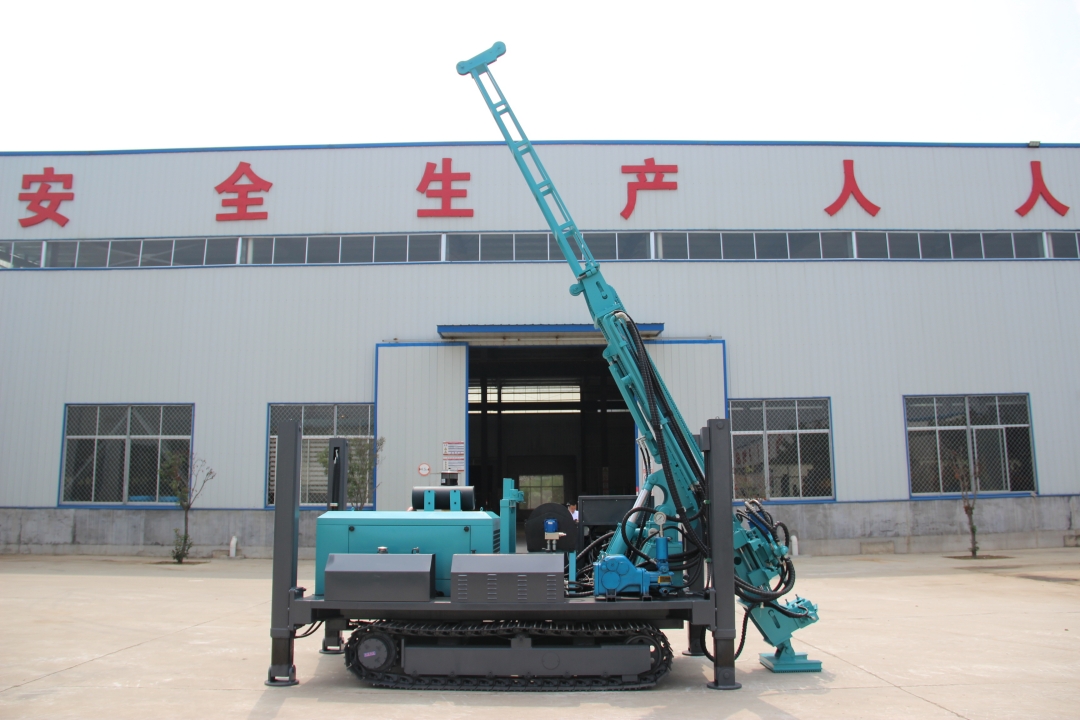
The main value of core drilling is the information contained in the recovered samples. Rock cuttings can indicate the type of material encountered, but a core sample preserves more of the original rock structure.
Geologists can examine mineralization, fractures, bedding, and changes in rock texture. They can also record how these characteristics vary with depth. In mineral exploration, the samples may be sent for laboratory analysis to determine mineral content and evaluate the potential of a deposit.
Sample quality matters throughout this process. Broken or incomplete cores can make some geological features harder to interpret, while drilling conditions, bit selection, core handling, and the characteristics of the rock all influence core recovery. A suitable drilling rig and a well-managed sampling process help produce useful geological records.
Core drilling and reverse circulation (RC) drilling are both used in mineral exploration, but they produce different types of samples and serve different project needs.
|
Comparison |
Core Drilling |
RC Drilling |
|
Sample type |
Cylindrical rock core |
Rock cuttings |
|
Main purpose |
Detailed geological examination |
Efficient collection of samples for exploration and grade evaluation |
|
Rock structure |
Preserves more of the original structure |
Individual cuttings provide less continuous structural information |
|
Typical consideration |
Core recovery and sample integrity |
Drilling productivity and sample collection |
|
Kaishan equipment example |
JY300 Core Drilling Rig |
RC300 / RC500 Reverse Circulation Drilling Rig |
Core drilling is a strong choice when intact rock samples are important for geological interpretation. RC drilling can be more practical when an exploration program needs to collect samples from many boreholes efficiently.
These methods can also complement each other. An exploration project may use RC drilling to investigate a broader area and core drilling to obtain more detailed samples from selected locations.
The first consideration is the required drilling depth. The rig must be suitable for the planned borehole depth under the expected geological conditions, with the appropriate drill rods and drilling tools.
Rock conditions and the required core size are also important. Hard, fractured, or variable formations may require different drilling parameters and bit configurations. Buyers should consider core recovery requirements, available water supply for drilling, site access, transportation arrangements, and the level of control needed over drilling speed and feed pressure.
For remote or difficult-to-access sites, equipment size and transportation are particularly important. A rig that can be disassembled or moved more easily may simplify deployment, provided its drilling capacity meets the project requirements.
The Kaishan JY300 is a compact, fully hydraulic diamond core drilling rig designed for shallow- to medium-depth geological exploration. According to Kaishan’s product specifications, it has a maximum drilling depth of 300 m and a rated engine power of 75 kW.
Its modular design supports transportation and deployment at sites where access is limited, including some mountainous and remote locations. The hydraulic drive and top-drive structure allow drilling parameters to be adjusted to suit different drilling conditions.
|
Technical Parameter |
JY300 |
|
Maximum drilling depth |
300 m |
|
Hole diameter |
60–100 mm |
|
Engine power |
75 kW |
|
Drilling angle |
45°–90° |
|
Mud pump model |
BW90-3 |
|
Lifting force |
10 T |
|
Slewing speed |
0–1,200 rpm |
|
Gradeability |
30° |
|
Walking speed |
2.5 km/h* |
|
Weight |
6.5 T |
|
Overall dimensions |
4,800 × 1,700 × 2,280 mm |
*The walking-speed unit on the product page is listed as “2.5KW”; confirm the unit with Kaishan before publication.
The JY300 is worth considering for geological exploration, mineral sampling, and engineering investigations that fall within its rated capacity. The final configuration should be selected according to the target depth, required core diameter, formation conditions, and site accessibility.
Selecting a core drilling rig is not just about choosing a maximum drilling depth. The rig also needs to match the required sample quality, drilling conditions, and practical limitations of the site.
Kaishan offers core drilling rigs for different drilling capacities, including the JY300, JY600, JY800, JY1000, and JY2000. If you are planning a geological exploration or engineering investigation project, share your target depth, required core size, ground conditions, and site details with Kaishan to identify a suitable configuration.
A core drilling rig is mainly used for mineral exploration, geological investigation, geotechnical surveys, and engineering site assessment. It recovers cylindrical rock samples that can be examined to understand underground formations.
Core drilling is designed to recover rock samples while preserving much of their original structure. Other drilling methods may focus primarily on creating a borehole or collecting loose cuttings rather than retrieving intact rock cores.
Yes. Core drilling is widely used in mineral exploration because it allows geologists to examine rock structure, mineralization, and geological changes at different depths. Laboratory analysis of the recovered samples can provide additional information about mineral content.
The Kaishan JY300 has a listed maximum drilling depth of 300 m. Actual drilling capability depends on geological conditions, the selected drilling configuration, and operating requirements.
Choose core drilling when detailed examination of rock structure and intact samples is important. RC drilling may be more suitable when efficient collection of rock cuttings across many exploration holes is the priority. The decision depends on the geological information the project needs and the planned drilling conditions.
